
PWB vs PCB: Understanding the Key Differences in Circuit Board Technology
Jul 25, 2025
Have you ever been confused by the abbreviations PWB and PCB while reading circuit board technical documentation? Though they appear similar, these terms represent crucial differences in manufacturing standards and product reliability. With 22 years of electronic manufacturing expertise, TECOO provides this definitive guide to clarify these essential concepts.
1. Fundamental Definitions
PWB (Printed Wiring Board)
Definition: A PWB refers to a substrate that solely provides electrical connection functionality, primarily serving to support and connect electronic components without integrated circuit features (such as resistors, capacitors, etc.).
Key Characteristics:
- Primarily used in early electronic devices with simple structures
- Contains only conductive traces (copper foil) and pads without complex circuit design
- Less commonly used today, though still maintained in certain traditional industries (particularly in Japan)
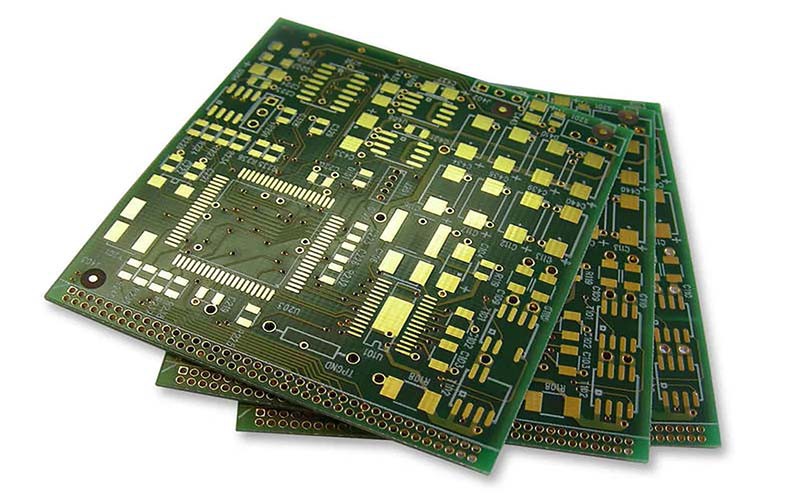
PCB (Printed Circuit Board)
Definition: A PCB represents modern circuit board technology that not only provides electrical connections but also integrates complete circuit functionality (including signal processing, power management, etc.).
Key Characteristics:
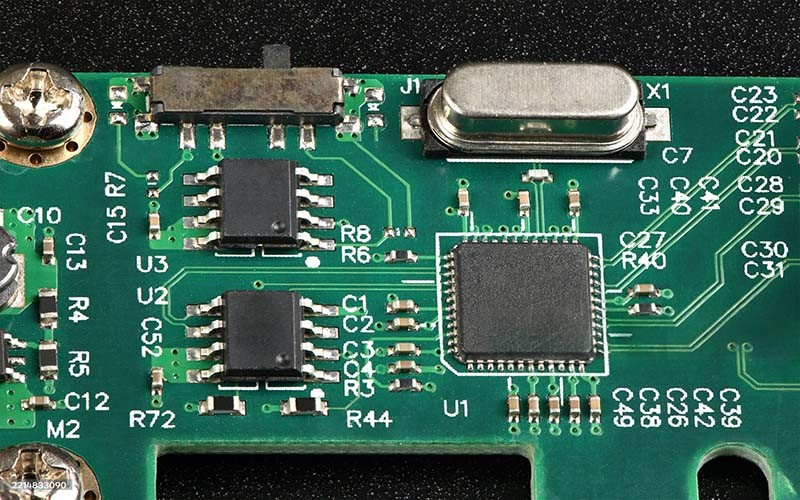
- Utilizes multilayer designs capable of integrating high-density components (ICs, resistors, capacitors)
- Supports complex circuits including high-frequency signals and high-speed digital circuits (5G, AI hardware)
- Serves as the core component in modern devices (smartphones, computers, automotive electronics)
Simple Summary:
✅ PWB = Printed Wiring Board ("blank canvas" with only metal traces)
✅ PCB = Printed Circuit Board ("completed artwork" with installed components)
2. Historical Evolution
Mid-20th Century:
Early electronic devices required only basic wiring connections, utilizing PWBs (e.g., vintage radios, televisions).
Late 20th Century - Present:
With the development of integrated circuits (ICs) and microelectronics, circuit boards evolved to incorporate more functionality, making "PCB" the dominant term.
Current Usage:
- PWBs remain in specific traditional applications (e.g., simple power distribution boards)
- PCBs have become the industry standard, encompassing single/double-sided boards, multilayer boards, HDI boards, and flex circuits
3. Practical Application Differences
| Comparison Aspect | PWB (Printed Wiring Board) | PCB (Printed Circuit Board) |
| Primary Function | Electrical connections only | Complete circuit functionality |
| Complexity | Simple (single/double-layer) | Complex (multilayer, high-density) |
| Component Integration | Typically none | Resistors, capacitors, ICs, etc. |
| Applications | Legacy electronics | Smart devices, automotive, IoT |
| Industry Terminology | Regional usage (e.g., Japan) | Global standard |
4. Why PCB Has Become Dominant?
- Technical Advancement: Modern electronics demand higher integration beyond PWB capabilities
- Functional Expansion: PCBs incorporate embedded components (resistors, RF antennas)
- Industry Standardization: Global adoption of "PCB" terminology
5. Conclusion: Are PWB and PCB the Same?
Technically:
PWB represents the predecessor to modern PCB technology.
Industry Practice Today:
- "PCB" is the accurate term for most contemporary applications
- "PWB" appears only in specific traditional contexts
For modern applications in smart hardware, automotive electronics, or consumer electronics, "PCB" is the appropriate term. You may encounter "PWB" only when dealing with legacy equipment maintenance or simple connection boards.
This guide should clarify the distinction between these important terms! For professional PCB manufacturing and assembly services, contact TECOO - we specialize in PCBA/OEM production to accelerate your electronic product development! 🚀
Explore More:
PCB Manufacturing Capabilities
Our OEM Services
Contact Our Engineering Team
You Might Also Like
-
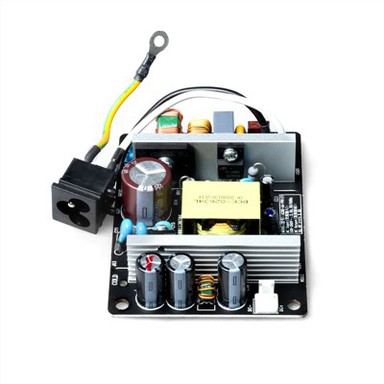
Air Purifier Circuit Board
-
OEM Electronic Assembly Manufacturer BLDC Motor Drivers B...
-
OEM & ODM Services Robotics PCBA Manufacturer Automated D...
-
Turnkey OEM PCBA Solutions For Three-phase Brushless DC M...
-
30kw DC Fast EV Charger Module For EV Charging Station - ...
-
20kw DC Fast Charging Module - Charging Module, EV Charger